Painting on Location
by Donald A. Jusko
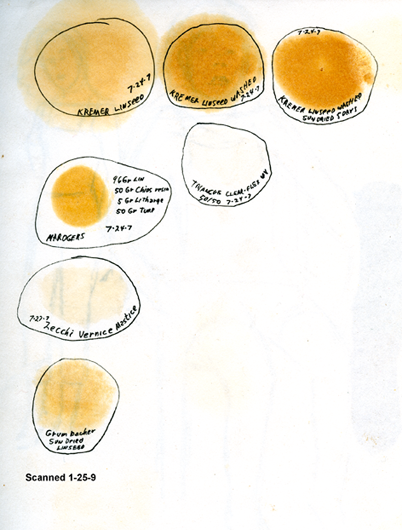
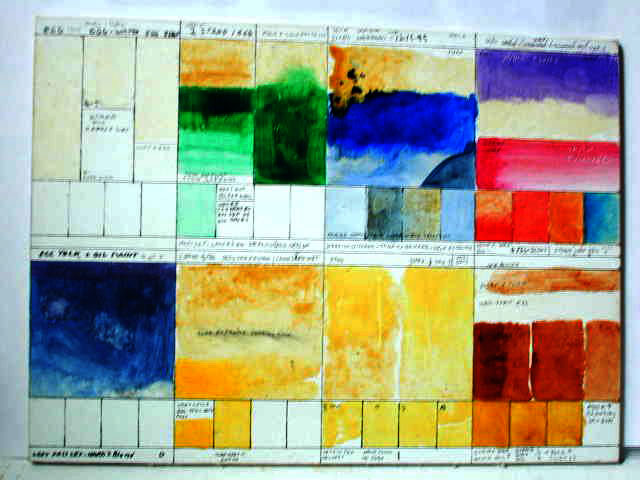
All oil yellows a little, safflower the least.  Dammar and Wax do not yellow.
Starting test date, 1995. This page was made in 2000


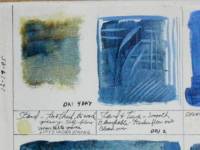
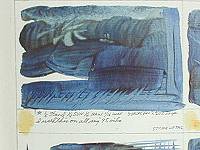
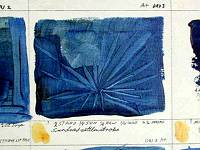
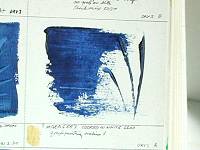
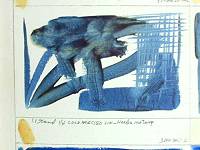
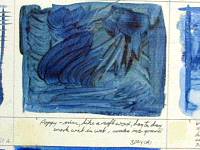
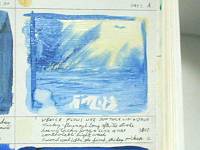
Click the picture to read the notes.

1
#1- Stand oil


2
#2- Dammar and wax dries faster without wax.
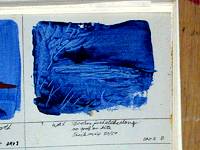

3
#3- Bees wax

4
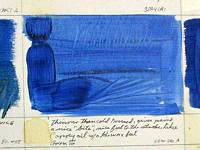
#4- 1/2 Stand oil, 1/4 Sun thickened linseed oil, 1/4 Cold pressed raw linseed oil, Cobalt drier (5 drops per 2.5 oz. = 2%)


5
#5- 2 parts Stand oil, 1/8 Sun thickened, 1/8 Raw cold pressed, 1/16 Beeswax, 2% drier.


6
#6- Maroger's medium, linseed oil cooked with lead.


7
#7- 1 part Stand oil, 1/4 Cold pressed raw linseed oil.


8
#8, Poppy oil


9
#9- Venetian balsam


10
#10- Grumbacher Gel


11
#11- Grumbacher III


12
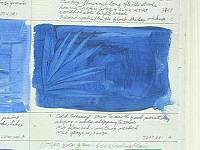
#12- Cold Pressed linseed oil


13
#13- Cold pressed linseed oil plus Dammar
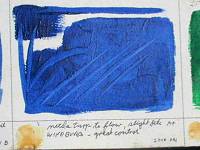


14
#14- Windburg pre-mix


15
#15- 2 parts Stand oil, 1/8 Venetian balsam, 1/8 Raw Cold pressed linseed, no drier added

SICCATIVE DRIER

SICCATIVE
Here is the meanest yellowing agent on the block. Cobalt Drier.


EGG AND OIL MEDIUM

egg chart

1, 2, 3, 4,
5, 6, 7, 8

#1a- egg yolk, 
#1b- egg and water,
#1c- egg and turpentine.
#2a- Two parts stand one part egg, 
#2b- yolk and cold pressed linseed oil, notice how much more yellow the stand oil and egg is. It is hard to blend because the egg causes it to set quickly.
#3- Winsor Newton Stand oil and turpentine, stand is a stiffener, turp is a relaxer. Look how yellow it got.
#4- Cold pressed linseed oil.
#5- Egg yolk and oil paint, very fast setting. Hard to blend.
#6- Two stand oil, 1/2 egg. Sets in one minute. Wet for 3 days. Turpentine keeps it loose. Stand oil yellows badly.
#7- One part Stand oil, 1/2 egg, sets in 10 seconds.
#8- Wax, turpentine and egg. Poor blending, dry in 5 hours.


This test is from 4-4-00
The picture was shot in the bright sunlight. 
Rather than darkening the background I lettered the samples
That's W/N Raw cold pressed linseed oil on the top left A.
That's pretty scary ..
Anyway, Damar, Damar/Wax,  Polyurethane and Gamvar Varnish are clear.
Galkyd Alkyd and Venetian Balsam did well.
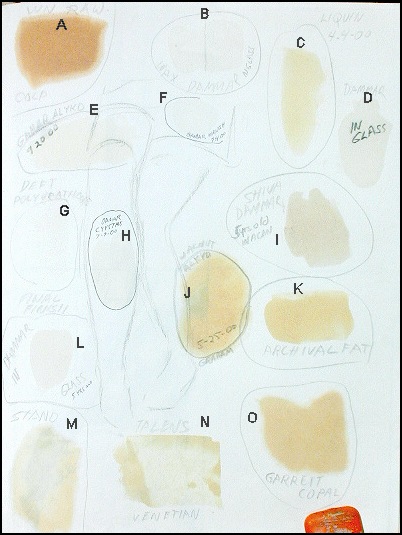
two year test 06-14-2001

B is Wax and Damar
C is Liquin
D is Damar
E is Gamvar Alkyd
F Gamvar Varnish
G Delf Polyurethane
H Damar crystals
I Sheva Damar 5yrs in a metal can.
J Walnut Alkyd Graham
K Archival fat Alkyd
L Damar in glass 5yrs old
M Stand Oil
N Talens Venetian Balsam
O Garrett  Copal


6-8-8
Ron L. asked me today about the oil tests.
I just opened the test book, it's been mostly closed for 8 years. The 12oilyellow has not darkened enough to matter. The lightest medium is still 1damar:1/4wax and pure wax, Venetian balsam. poppy oil, cold pressed and damar. The next darkest is Grumbacher lll.

The SICCATIVE DRIER test has gotten a lot darker.

On the page with the W/N raw (A), it has gotten darker, Graham walnut alkyd is as dark as W/N raw was in 2000 (J). Stand oil (M) has almost caught up in darkness to Graham's walnut alkyd junk (J). I don't like that company, they sold me some dry PR:122 magenta and it turned brown in lime, 100% fake. Sennelier's PR:122 is still beautiful. Gamar alykd (E) is doing almost as well as damar. That surprised me, IT'S THE MOST NONE YELLOWING OIL OF ALL. ! And since I like the speed of alykd I'm going to use it more often. Shiva damar (I) failed completely, make your own damar all the time. Gamar varnish (F) is as clear as damar.

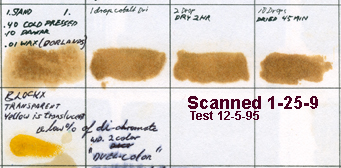
cobalt drier.. 1 drop in a mixture (didn't mark down the drying speed) 2 drops dry in 2 hours, 10 drops dry in 45 minutes. All are dark, 10 drops not much darker then 1 drop.


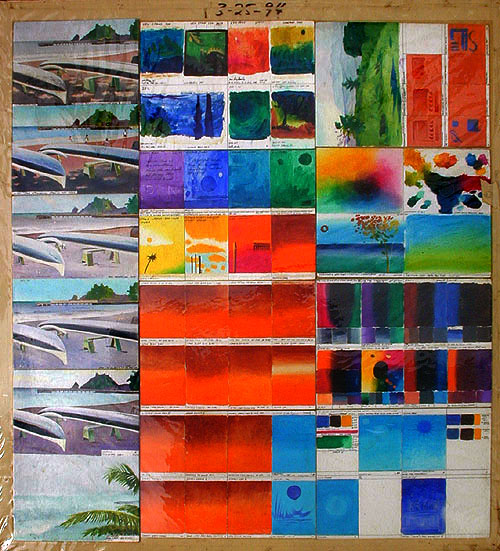
These media tests were painted in 1994, they reinforce the 1995 and 2000 media ageing tests
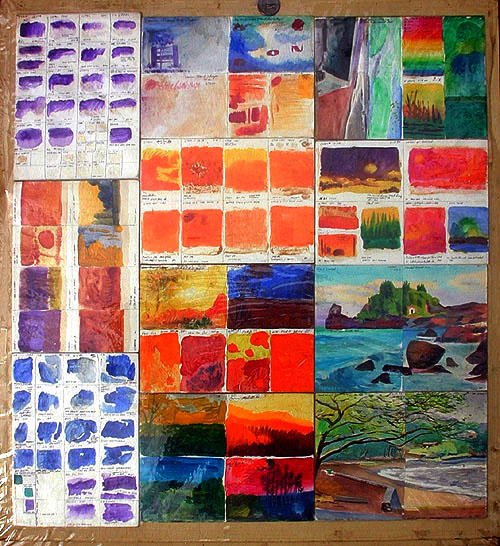
1994 A
Media age test B

The below list of materials aged, from the clearest to yellow.

Bee's Wax, has no grab or bite and is very smooth blending. (B)
(smoothes the bite of damar, A+)

GamVar, very glossy varnish, synthetic crystals, two part mix. I never painted with it but like it as a varnish.

Weber Soluvar, synthetic varnish, painted well with wax added, (B).

Damar, has too much bite. (B)
(adds bite to cold pressed)
(1 Damar and 1/4 Wax, easy to pick-up an under-stroke, best for murals. A+)

Copal, re-dissolves like Damar while it's wet, has an oil base. (A)

Liquin, has a stringy touch. (B)

Poppy Oil,
(wet in wet work, extends alla prima painting, paints like a soft wax, B)

Venetian Balsam, sticky, tacky drag, flow-out long after the stroke. Second stroke lifts the first. Slick with turpentine. (C)
(1 Venetian and 1 cold pressed works very well as a glaze. A+)
(1/4 part Venetian, 1 part Stand Oil and 1/2 part Sun Dried Linseed Oil, 1/2 part Cold Pressed Linseed Oil, 1/4 part Turpentine, 1/16 part Bee's Wax,  my choice of medium, a tough to make mix, but worth it. A++)

Cold Pressed Linseed Oil, No flow-out, too slippery, nice glaze with turpentine.
(good medium by itself, A-)
(Cold Pressed and Sun Dried linseed, A)
(1/4 cold pressed adds slippery to 1 stand oil, A)
(cold pressed and damar, adds flow to oil, B)

Sun Thickened Linseed Oil, Same aged color as Cold Pressed (settles strokes, slippery)

Boiled Linseed Oil, slippery, paints well, used by billboard painters. Reduced by hot blown air.

Stand Oil, Lifts under-strokes, too thick, greasy, self flowing, forms a wrinkled skin, very poor with driers.
(1/2 Stand, 1/4 sun thickened, 1/4 cold pressed, 1/16  wax, is an excellent medium, A+)
(stand and turpentine has some bleed over but is smooth and blendable. A-)
(2 stand, 1/8 of 1 sun, 1/8 of 1 cold pressed, 1/16 of 1 wax. A+)
(1 Stand Oil, 3/4 Sun, 1/3 Cold pressed Linseed, A+)
(Stand Oil, Venetian Balsam, Turpentine, constantly needs turpentine replenishment, slight edge bleed, needs Venetian, A)

Alkyd, Very fast drying. I like painting with it but most people can't handle the speed. It's like painting with laquer in B/C China.

Raw, today's hot extracted or Refined linseed oil. Poor.

[quote]Hi Don, in one of the 'yellowing' test the caption reads....
"That's W/N Raw cold pressed linseed oil on the top left A.
That's pretty scary !"
So, which was it? raw or cold-pressed or both?[/quote]

I think it was refined linseed oil, purchased when the change was being made. I remember I got 6 bottles of it. It was Raw. Now the results match today's results of the 1994 tests where Stand Oil and Alkyd were the worst yellow offenders.

[quote]And, I take it that you are recommending the cold-pressed as a good all around medium for alla prima? thanks
Mario[/quote]

Yes, it's good, but not by itself or mixed with turpentine. And if you are going make a medium with more then one ingredient... three is better. Add Stand Oil and Sun Dried Linseed Oil.

Permeable White stays the whitest, MG fast drying white turned the yellowest.


NEXT, Mold Happens
PREVIOUS, Oil Staining


Real Color Wheel Course  | Site Tree of all links  | gallery with tips 1  | 2  | 3  | 4  | 5  | 6  | 1st paintings with tips  | 50th  | 100th  | 150th  | 200th  | paintings for sale  | coloring book examples  | location video for sale  | color workshop gif/jpg  | children learning color  | rainbows  | coloring book  | making panel supports  | making mediums  |brushes that work  | my pigments  | oil palette map  | acrylic palette map  | self portraits  | 1881 paints  | learn perspective  | picturatranslucida  | painting waves  | painting with alkyd  | aerial perspective  | coloring page and palette  | compare brand colors  |permanent transparent colors  | large real color wheel charts  | Real Color Wheel  | match tube colors  | 6 important complements making neutral dark  | 36 color chips mixing neutral dark  | aerial perspective palette  | human proportions and painting  | links and awards  | biography  | testimonials | Latest Painting Lesson


Order this complete color course on CD, $35.00.
Order only a 5"X5" Laminated Real Color Wheel $10.00


Painting on Location Join Email list Talk about oil   Email  Don Jusko


Free .bmp RCW printable zip.